Explore a world of possibilities.

Zürich

Zürich

Zürich runs on punctual trams and Swiss precision, but it also runs on lake swims, quiet sophistication, and a love of design that shows up everywhere from museums to street corners. Indie shops now fill old guild buildings, the river turns into a hangout spot as soon as the sun is out, and nightlife pulses under stone arches in once-industrial districts. Between modern museums, lakeside strolls, and mountain views that steal the show, Zürich balances city polish with an easy, effortless charm.
Read more
St Louis, Missouri

St Louis, Missouri

St. Louis, the largest city in the Great Plains, is known as the "Gateway to the West." This vibrant city is famous for its iconic 630-foot Gateway Arch and its role in westward expansion. But there's much more to discover! Artisanal breweries, bowling alleys, and baseball games are essential to the city, and a rich musical heritage lives on in countless live-music venues. Explore the city's history and culture along the Mississippi River, and enjoy beautiful parks and delicious local cuisine.
Read more
Autumn and winter colours
Le Cap d'Agde Méditerranée, France

Autumn and winter colours

Discover the destination with all the gorgeous colours of autumn, it is also a place worth discovering.
Read more
Fort Myers

Fort Myers

Chosen as a winter refuge by Thomas Edison at the turn of the last century, Fort Myers sits away from busier and more opulent Florida centers, maintaining the carefree, low-key atmosphere of a sea town. Assuming beach life is Fort Myers' only attraction would be a mistake: the town center boasts a vibrant street life, with a plethora of indie art galleries and interesting spots for history and science lovers. The area's natural beauty continues inland, where protected animal species take shelter among mangroves and narrow bayou bends.
Read more
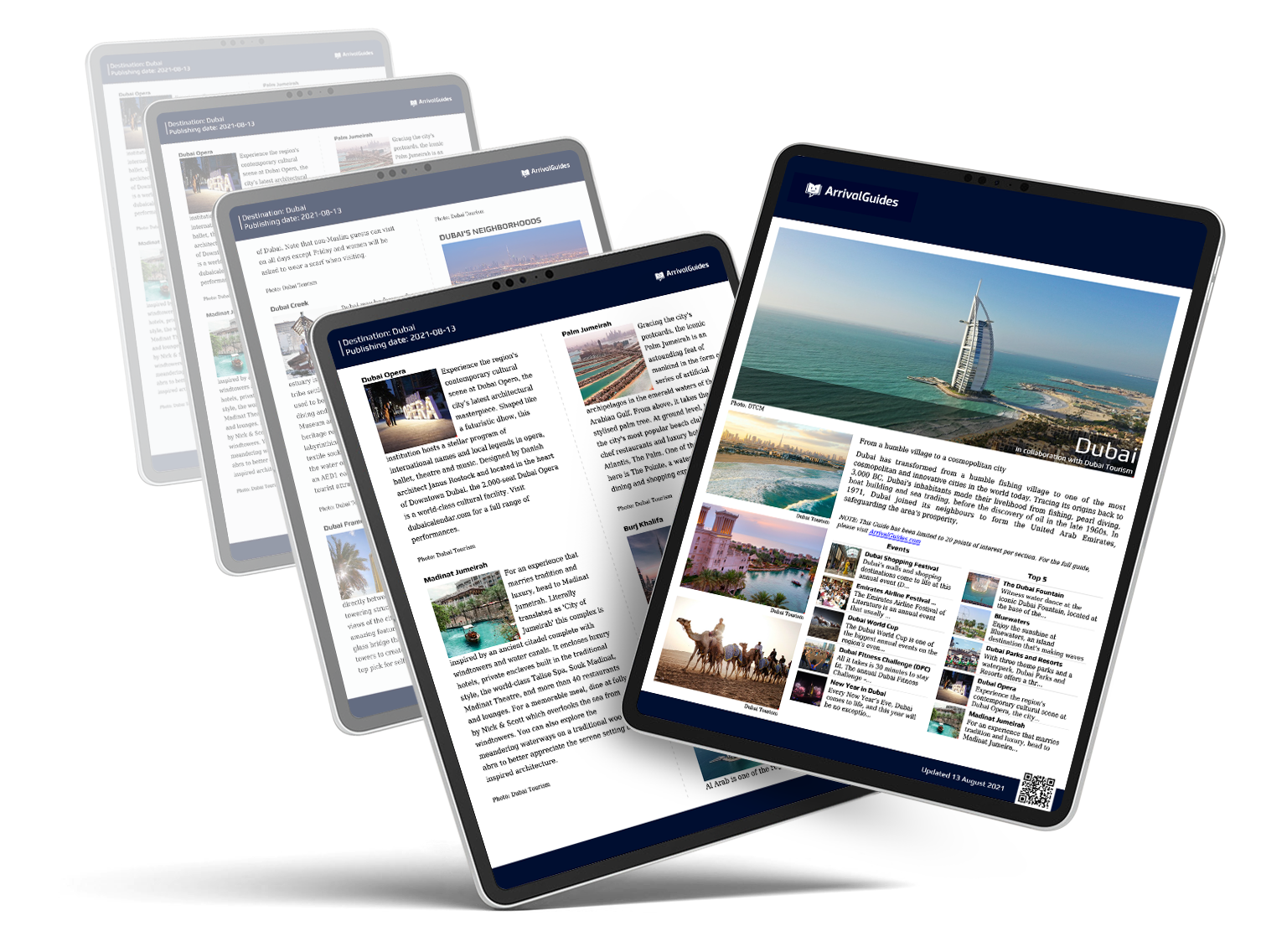
Five Days in Dubai
Dubai, United Arab Emirates

Five Days in Dubai

The sun always shines in Dubai, ensuring endless fun on every holiday. Spend your days lounging at the beach, dining at celebrated restaurants, shopping at al fresco districts and immersing yourself in the city’s cultural best. Our itinerary presents thrills for all ages and settings that inspire.
Read more
Bali

Bali

Bali's breathtakingly beautiful scenery makes it easy to just settle for the imaginary cliche of the island as a tropical paradise and nothing more. But behind the luxury resorts, picture-perfect rice fields, and idyllic beaches lies a rich culture, steeped in tradition and spirituality, and one of the friendliest and most welcoming places you're likely to find anywhere. Dare to go beyond the comforts of the resort areas to truly explore all the island has to offer and let yourself be rewarded with memories to last a lifetime.
Read more
Three Days in Dubai
Dubai, United Arab Emirates

Three Days in Dubai

Whether you’re new to Dubai or a seasoned expert, our city always has surprises in store. Explore sky-high landmarks, charming waterside spots and cultural gems aplenty. Or go off the beaten track to hike in Hatta’s mountains, camp under the stars and create memories to last a lifetime.
Read more
Bilbao

Bilbao

One of the jewels of northern Spain, Bilbao is a city full of surprises and delights. It boasts a unique blend of tradition and modernity, which is reflected in its stunning architecture, rich cultural heritage, and outstanding cuisine. At its heart lies the magnificent Guggenheim Museum, one of the most impressive structures in the world. Its streets are alive with the sound of Euskara, Europe's oldest and most enigmatic language, while the Casco Viejo (Old Town) is full of traditional bars for sampling pintxos.
Read more
Ghent

Ghent

Ghent is a compact, authentic city where the past and present co-exist in perfect balance. Walking through the city is like travelling through time: you turn the corner and just like that, you go from the fourteenth century to the twenty-first. In Ghent pounds the young heart of a cultural city filled with music, theatre, film and visual arts. Because of its central location in Flanders, Ghent is an ideal operating base to visit the Flemish Art Cities. Ghent is ready to welcome you with open arms!
Read more
The Castle of the Counts
Ghent, Belgium

The Castle of the Counts

A weekend trip to Ghent is simply not complete without a visit to the mysterious ‘Castle of the Counts’. This important sight in Ghent is a castle with a very turbulent past, closely intertwined with the complex—often stormy—political and social history of the city. It is the only remaining mediaeval castle with a moat and largely intact defence system in Flanders. Your visit to the Castle of the Counts will give you a complete picture of heraldic culture in the 12th century. The gatehouse, ramparts, keep, count’s residence and stables are open to visitors. Be sure to go up the long spiral staircase to the museum of torture devices on the top floor of the Castle of the Counts. Here, you will find a unique collection of instruments for torture and coercion, as well as a collection of weapons. The Castle of the Counts also hosts all kinds of cultural activities, events and activities, for example during the Ghent Festivities. It is also a popular place to get married for Ghent’s locals. Let’s not forget the time the Castle of the Counts was occupied by protesting students in 1949! Explore the castle during your weekend trip in Ghent and find out all about the ‘Battle of the Castle of the Counts’. The keep, symbol of the Counts’ power Go back in time inside this majestic fortress. Its history goes back to the time of the Roman occupation, when there was already a settlement on a sand bank by the River Lys. After a brief period of Viking plundering, the Counts of Flanders converted the earlier wooden constructions into a keep (living quarters) in the Middle Ages, with ramparts built entirely of stone, replete with 24 towers. The imposing building with its military architecture was a symbol of the Counts’ power in the turbulent city of Ghent. Do you want to dig deep into the history of Ghent? This is where you need to be. Ghent, full of charming history and modern vibrancy.
Read more
Ghent Belfry, world heritage
Ghent, Belgium

Ghent Belfry, world heritage

Look up at the magical city skyline for a moment during your weekend trip in Ghent: you can’t miss it. The Belfry is the middle tower in the famous row of three, between St Bavo’s Cathedral and St Nicholas’ Church. A fiery dragon, the proud symbol and mascot of Ghent, guards the historic heart of the city. The Ghent Belfry symbolises the city’s prosperity and independence. The Cloth Hall, built onto the Belfry, was completed in 1907. The flamboyant Brabant Gothic style of the Cloth Hall is an ode to the industry to which Ghent owes so much. On the corner of the Cloth Hall is an old jailer’s house. The Ghent Belfry, a recognised UNESCO World Heritage, is well worth a visit. In 1402, it was the place where city privileges were kept: in a chest, locked up in the Belfry safe. The dragon, which has been up on the tower since 1377, kept an eye on the city as well as being the symbolic guardian of the belfry. The Belfry also proudly carried the alarm bell, the ‘Great Triumphant’. Today you will find this bell, nicknamed ‘Roland’ by the people of Ghent, not far from the Belfort on Emile Braunplein. Until 1442, St Nicholas’ Church was the main watchtower. In 1442, the watchmen in the tower moved across to the newly completed Belfry. Along with the bell ringers, these watchmen, or the corps of ‘men who guard the city’, served until 1869. Fire was a particular danger in Ghent. The Belfry tower is an absolute must-see! Climb the stairs, listen to the chiming sound of the carillon and enjoy the view of the vibrant city of Ghent. There is a lift from the first floor. The stunning view over Ghent is bound to enchant you. However, the Belfry is not accessible to visitors with reduced mobility. The Mammelokker, a legend behind bars In 1741, a building was erected between the Belfry and the Cloth Hall, which served as the entrance to the city jail. You will see a relief sculpture above the entrance. The sculpture tells an old Roman legend of a man, Cimon, who was sentenced to death by starvation. He survived his sentence because his daughter visited every day and breastfed him. ‘Mamme’ means ‘breast’ and ‘lokken’ means ‘suck’ in an old Ghent dialect.
Read more