Explore a world of possibilities.

Warsaw

Warsaw

Anything you can dream of you will find in the Polish capital: interesting history, a wealth of events, exciting nightlife, Michelin-starred restaurants, and an abundance of green areas. Check out the charming Old Town and take a stroll down the Royal Route. Learn about the city's history in one of Warsaw's many interactive museums. Spend a wild evening by the Vistula and chill out listening to a Chopin concert at Łazienki Royal Park. No doubt, Warsaw is a must-see on the tourist map of Europe.
Read more
Autumn and winter colours
Le Cap d'Agde Méditerranée, France

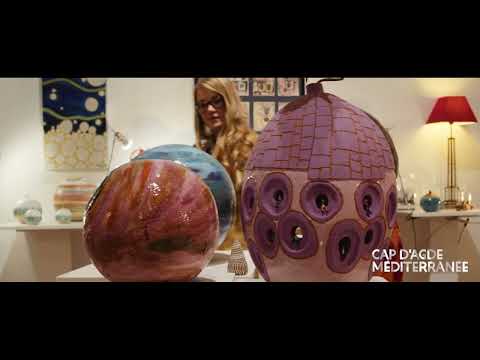
Autumn and winter colours

Discover the destination with all the gorgeous colours of autumn, it is also a place worth discovering.
Read more
Durban

Durban

South African Durban, known as eThekwini in Zulu, has to be one of the continent's most appealing cities, especially after the 2010 World Cup breathed new life into the area by revamping the waterfront; the splendid Moses Mabhida Stadium remains one of Durban's primary attractions to date. Durban moves to the beat of gqom, its own home-grown music genre, which is slowly making its way onto global charts from South Africa's sunny, tropical melting pot of eclectic cultural influences.
Read more
Szczecin

Szczecin

Szczecin is an energetic city where the River Odra eventually flows into the Szczecin Lagoon. Today, it is the capital of the region of West Pomerania, which has suffered a turbulent history and now looks to an enlightened and cultural revival. A focal point is that it has managed to preserve its unique character and charm since its recent reform. Szczecin is now awakening to its full potential at an ever-increasing pace. You will feel truly inspired as you explore this enthralling city.
Read more
Alicante

Alicante

Different civilizations have passed through these lands, leaving their mark which can be seen in all corners of this emblematic city. All of this adds to the appeal of this modern city with a primary focus on tourism, but also a special interest in industry and commerce. Alicante, situated on the coast of the Mediterranean Sea, offers not only a great variety of services but also a wide range of cultural activities, with its museums, its festivals and its nature areas, in particular the Island of Tabarca (Mediterranean Marine Reserve).
Read more
Five Days in Dubai
Dubai, United Arab Emirates

Five Days in Dubai

The sun always shines in Dubai, ensuring endless fun on every holiday. Spend your days lounging at the beach, dining at celebrated restaurants, shopping at al fresco districts and immersing yourself in the city’s cultural best. Our itinerary presents thrills for all ages and settings that inspire.
Read more
Tivat

Tivat

Tivat feels like a town that’s caught in between—between old fishing days and shiny new marinas, between quiet corners and glamorous yachts. It’s small, but the kind of place that makes you want to stick around. Wander the cobbled streets, grab a coffee by the water, and you’ll get a sense of its easy-going rhythm. The Bay of Kotor stretches out before you, and while Tivat has its share of sleek, modern spots, there’s a certain charm in the old stone buildings and the salty breeze that still gives the place its soul.
Read more
Three Days in Dubai
Dubai, United Arab Emirates

Three Days in Dubai

Whether you’re new to Dubai or a seasoned expert, our city always has surprises in store. Explore sky-high landmarks, charming waterside spots and cultural gems aplenty. Or go off the beaten track to hike in Hatta’s mountains, camp under the stars and create memories to last a lifetime.
Read more
EKŌ-House of Japanese Culture
Düsseldorf, Germany

EKŌ-House of Japanese Culture

The EKŌ-House - since 1993 a centre for Japanese culture - consists of a Buddhist temple (the only Japanese temple in Europe), Japanese gardens, a traditional house with tearoom and, since 1999, another building including a library and an international kindergarten. The most important function of the EKŌ-House is the cultural exchange between East and West: Japanese citizens cultivate their traditions and allow local citizens the unique opportunity to participate.
Read more
Dialogue Center "Upheavals"
Szczecin, Poland

Dialogue Center "Upheavals"

It's one of branches of the National Museum in Szczecin, where we present the newest history of Szczecin and West Pomerania region, with particular attention given to social protests and breaking events in the years 1970–1971, 1980–1981, 1988–1989, that lead Poland to regain independence in 1989. The building that houses our museum is partially hidden under the Solidarity Square. The exhibition is interactive, apart from subject-related pieces, in its underground rooms you may see films, pictures and recordings of the events’ witnesses and participants. Location of the museum has not been chosen by an accident - it was here when on 17 December 1970 first shots were fired at the protesters. In July 2016, the Dialogue Centre Upheavals was ranked the Best Public Space in Europe. Four months later, on November 18, the same building was named World Building of the Year during the Festival of Architecture in Berlin.
Read more
Burgplatz & Rhine embankment promenade
Düsseldorf, Germany

Burgplatz & Rhine embankment promenade

Burgplatz is where the little River Düssel, which gave the town its name, flows into the Rhine. In the background is the former collegiate church, St. Lambertus, with the shrine of St. Apolinaris. Next to the bridge over the Düssel, the monument to Düsseldorf being granted the privileges of a town demonstrates impressively more than 725 years of town history (town status granted in 1288). The square is dominated by Alter Schlossturm, the old palace tower (now the Schifffahrt-Museum navigation museum) and last testimony to the princely palace from the 13th century that fell victim to flames in 1872. The generously proportioned Rhine embankment promenade is considered one of the most beautiful on the Rhine. Upriver, the Medien Hafen is characterised by outstanding architectural creations, and the elegant district of Oberkassel on the opposite bank by art-nouveau facades.
Read more
Central Market
Alicante, Spain

Central Market

This building contains some modernist features and was built between 1911 and 1912 under the management of Juan Vidal Ramos over Balmes Square, over which there was still a part of the 18th century wall. With its rectangular shape, the Market mimics the layout of a basilica, with a circular appendix on the South-west side covered by a semispherical dome called La Rotonda (the roundabout). The building is split into two floors, one of which is a semi-basement due to the irregular surrounding streets. The front of the building was designed by Enrique Sánchez Sedeño and is presided by an impressive staircase surrounded by two emerging figures with decorative features. On 25th May 1938, the Mercado Central was hit during the worst bombing suffered by the city of Alicante during the Spanish Civil War, which resulted in 300 civilian victims. The Italian air force was responsible for that tragedy. All kinds of high-quality products can be bought at the Market, especially local fish and seafood, vegetables and fruit, as well as other typical local products. That is why the city’s top restaurants source their food from the Mercado Central.
Read more
Santa Bárbara Castle
Alicante, Spain

Santa Bárbara Castle

A visit to the Santa Bárbara Castle is highly recommended. Located atop Mount Benacantil, at a height of 166 metres, it is one of the largest medieval fortresses in Spain, with unbeatable views over the Bay of Alicante and on clear days you can see all the way to Tabarca Island. Such is its relevance that during the 20th century it was declared a Monument of Historic and Artistic Importance and a Site of Cultural Interest. Here we can also find one of the most characteristic images of the city, a rock formation resembling a man’s profile on the southwestern slope, known as the Moor’s Face, which is best viewed from Postiguet Beach. The Museum of the city in Santa Bárbara's Castle “MUSA”, housed in the Castle itself, was included in its cultural offer and it explains in five theme rooms the history of the city of Alicante and their inhabitants. To descend down from the Santa Bárbara Castle, take the route through Parque de La Ereta, along the mountainside. Its location and views transform it into a place of relaxation as well as a great meeting place. It also has a spectacular restaurant and, on the way down to the old town quarter, you can visit the picturesque, quintessentially Spanish Santa Cruz district. Another attractive option between the castle and the Santa Cruz district is walking along the remains of the walls that surrounded the Castle, which now end in the Santa Cruz district. Visitors can also access the castle via a lift built within the rock face opposite El Postiguet beach.
Read more