Explore a world of possibilities.

Limoges

Limoges

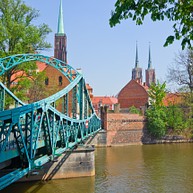
Nestled among rolling hills and overlooking a river, Limoges has a rich history associated with top-quality porcelain and an even longer tradition of enamelware. The town's proud heritage is reflected in its many sights and attractions, which were made possible by the wealth generated by these industries. The impressive medieval buildings constructed of local rose-tinted granite are a testament to the prosperity that once flourished here. With its vibrant atmosphere, quality shops and restaurants, and countless things to do, Limoges is a place of endless discovery and style.
Read more
Szczecin

Szczecin

Szczecin is an energetic city where the River Odra eventually flows into the Szczecin Lagoon. Today, it is the capital of the region of West Pomerania, which has suffered a turbulent history and now looks to an enlightened and cultural revival. A focal point is that it has managed to preserve its unique character and charm since its recent reform. Szczecin is now awakening to its full potential at an ever-increasing pace. You will feel truly inspired as you explore this enthralling city.
Read more
Brno

Brno

With a skyline dominated by the imposing Špilberk Castle and the soaring twin spires of the Peter and Paul Cathedral, Brno has an attractive and historic city centre. The name, Brno, might sound like a crossword anagram, but the Czech Republic's second-largest city and capital of Moravia is a vibrant, yet traditional place. Brno boasts stunning architecture, great museums, a crypt, a gorgeous lake–just a tram ride away–and an exciting, beer-filled bar scene without heaving crowds.
Read more
Autumn and winter colours
Le Cap d'Agde Méditerranée, France

Autumn and winter colours

Discover the destination with all the gorgeous colours of autumn, it is also a place worth discovering.
Read more
Oslo

Oslo

Known for its seamless blend of natural beauty and modern urban life, Oslo offers a unique Scandinavian experience. From its iconic waterfront, dotted with sleek architecture, to its cultural landmarks like the Viking Ship Museum, the Munch Museum, and the Royal Palace, Oslo delights visitors with its rich history and contemporary charm. With a thriving arts scene, innovative cuisine, and a commitment to sustainability, Oslo is a dynamic city that captivates travellers with its stunning landscapes, friendly locals, and progressive spirit.
Read more
Five Days in Dubai
Dubai, United Arab Emirates

Five Days in Dubai

The sun always shines in Dubai, ensuring endless fun on every holiday. Spend your days lounging at the beach, dining at celebrated restaurants, shopping at al fresco districts and immersing yourself in the city’s cultural best. Our itinerary presents thrills for all ages and settings that inspire.
Read more
Shanghai

Shanghai

Shanghai is the shiniest gem in modern China’s jewel box. It’s a hip, contemporary city that charges into the future with all the energy of its famous Maglev train. At the same time, if you veer away from the sleek highways and glitzy shopping streets, you can still stumble upon a more traditional Shanghai, with all its character and flavour. In the tiny back streets, wet-market vendors peddle their wares — buckets of bright green vegetables, fish flapping in shallow plastic bowls, and heaps of crayfish crawling over each other.
Read more
Three Days in Dubai
Dubai, United Arab Emirates

Three Days in Dubai

Whether you’re new to Dubai or a seasoned expert, our city always has surprises in store. Explore sky-high landmarks, charming waterside spots and cultural gems aplenty. Or go off the beaten track to hike in Hatta’s mountains, camp under the stars and create memories to last a lifetime.
Read more
St. James Arch Cathedral and the tower
Szczecin, Poland

St. James Arch Cathedral and the tower

St. James’ church in Szczecin was founded in 1187 be a wealthy townsman Jakob Beringer from Bamberg and it was constructed outside the city fortifications, on a hill, just like the Benedictine monastery church of St. Archangel Michael in Bamberg. The building was rebuilt several times. In the 13th century, the building had the form of a three-nave Gothic basilica, without buttresses, but later the naves were raised. In 1534, the temple passed into the hands of Protestants. Inside the cathedral there is a chancel with an altar table and decorative brass reliefs. There is also a triptych with reliefs from the 14th century and an elaborate crucifix from the turn of the 15th and 16th centuries. The cathedral has 19 chapels, including the Chapel of Our Lady of Częstochowa with a neo-Gothic interior and the image of Our Lady of Częstochowa; the Baptism Chapel with a triptych from the 16th century; and the Chapel of the Blessed Sacrament with a beautiful altar from the end of the 14th century. The organs in the cathedral are truly impressive. The first mention of the instrument comes from 1679; unfortunately, they did not survive the turbulent history of the place. In 2008, new, large organs were built. An interesting fact about the instrument is the fact that the main part of the organ, weighing about 30 tons, is suspended above the nave without any support. The counterweight is the construction located at the end of the choir. The instrument is 10 m high, has 66 voices and consists of 4743 pipes, from 11 mm to 10 m high. In 2008 the cathedral’s tower was rebuilt and its original appearance was restored. There is a viewing platform on the tower, available for tourists all year round. After the renovations, the tower is 110.18 m tall and is the second tallest building in Szczecin. The building is currently the second tallest temple in Poland, right after the basilica in Licheń. The temple is part of the European Route of Brick Gothic.
Read more
Pomeranian Dukes' Castle
Szczecin, Poland

Pomeranian Dukes' Castle

Anyone entering Szczecin by bridges over the Oder River can see the towering red-brick gothic Cathedral and an elegant, pale silhouette of a Renaissance castle with green towers, which used to be the seat of the dukes of the Griffins dynasty who ruled the Duchy of Pomerania. The Pomeranian Dukes’ Castle has five wings and two courtyards. Acting as a cultural institution it organizes an array of cultural events: concerts, theatre performances, exhibitions, conferences and meetings to popularize science, as well as to spread knowledge about the history of West Pomerania. The largest wing houses an Opera. In the wing that housed a mint in the olden days one can find today Cultural and Tourist Information Centre. There is a panoramic terrace on the rooftop of the northern wing from where splendid views can be appreciated. The wing’s basement houses a Vault with sarcophaguses of six princes. The Duke Boguslaw X hall, which used to be a princely chapel, is now a concert hall with a polychromatic ceiling decorated in Renaissance style. A 17th century astronomical clock is the Castle’s special tourist attraction. Also a room dedicated to Eilhard Lubinus and the Witches’ Cell are definitely worth a visit.
Read more