Explore a world of possibilities.

Santander

Santander

Santander is famous for its fabulous beaches and its elegant holidaymakers: King Alfonso XIII used to spend his summers here nearly a hundred years ago, and the town is still popular among fashionable madrileños who like to be seen sauntering along the El Sardinero seafront with its belle époque architecture. When the sun goes down, the town is busy, with great restaurants and a lively bar scene. It is also a good place from which to explore the pristine countryside of Cantabria.
Read more
Perpignan

Perpignan

Located in the deep south of France, Perpignan is the capital of the Pyrénées Orientales. Its geographical and cultural identity is directed naturally toward Spanish Catalonia since it's a border city, looking out onto the Mediterranean coast and the highest mountains of the French Pyrenees at once. Perpignan is a busy place greatly influenced by Mediterranean cultures and benefiting from 2,500 hours of sun per year. No wonder Salvador Dali saw it as the “Centre of the World”.
Read more
Annecy

Annecy

Coiled between lake and mountains, Annecy deserves its nickname of "Venice of the Alps". This harmonious city allows you to travel through time, from prehistory to the present day, before following in the tracks of the Princes of Savoy and eating next to the purest lake of Europe, while enjoying the numerous festivals and cultural animations. The city is also turned towards sports: the ski resorts are near the city and accessible by bus, and a biking trail goes all around the lake and lets you explore the shores.
Read more
Autumn and winter colours
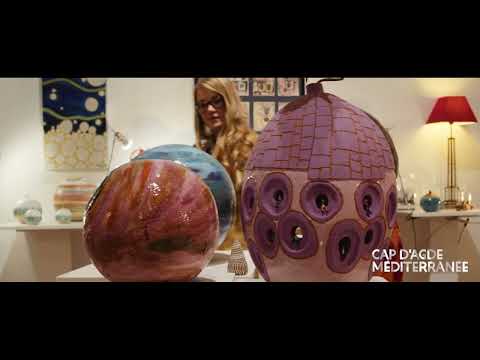
Le Cap d'Agde Méditerranée, France

Autumn and winter colours

Discover the destination with all the gorgeous colours of autumn, it is also a place worth discovering.
Read more
Öland

Öland

Welcome to Sweden's smallest province, and an island of grand adventures. Here, the best things in life don't cost a penny — the distinctive natural landscapes are free for all to enjoy. With over 300 kilometres of coastline, countless beaches, more than 75 nature reserves, the expansive Stora Alvaret, and the World Heritage-listed agricultural landscape of Southern Öland, there's no shortage of natural wonders. An added bonus is the 28 different species of orchids that flourish across the island. Welcomed to Öland!
Read more
Five Days in Dubai
Dubai, United Arab Emirates

Five Days in Dubai

The sun always shines in Dubai, ensuring endless fun on every holiday. Spend your days lounging at the beach, dining at celebrated restaurants, shopping at al fresco districts and immersing yourself in the city’s cultural best. Our itinerary presents thrills for all ages and settings that inspire.
Read more
Three Days in Dubai
Dubai, United Arab Emirates

Three Days in Dubai

Whether you’re new to Dubai or a seasoned expert, our city always has surprises in store. Explore sky-high landmarks, charming waterside spots and cultural gems aplenty. Or go off the beaten track to hike in Hatta’s mountains, camp under the stars and create memories to last a lifetime.
Read more
Rijeka

Rijeka

Straddling the Adriatic Sea where it plunges deepest into Europe, Rijeka boasts a rich maritime history. Croatia's third largest city and the heart of Primorsko-Goranska County, its charm lies in its hospitable spirit and diverse cultural heritage. As you amble along the Habsburg-era Korzo promenade, peek into the 19th-century National Theatre, graced with Klimt's artwork. Soak up the sweeping views of Kvarner Bay's islands from Trsat Castle. A cosmopolitan harbour of coexistence, welcome to Rijeka.
Read more
Ottenby Bird Observatory
Öland, Sweden

Ottenby Bird Observatory

Ottenby, on the very south of the island of Öland, is one of the top areas for birding in Sweden — 377 species have been observed here. A visit to Öland offers fantastic opportunities for bird studies all the year round. Ottenby Bird Observatory was founded in 1946 and has ever since performed studies on migrating birds. Around 20,000 birds are ringed each year. Also, the bird observatory is involved in bird migration research projects on the island of Capri, Italy, and in Nigeria.
Read more
Regional Archaeological Museum San Juan de Dios
Orihuela, Spain

Regional Archaeological Museum San Juan de Dios

The Orihuela Archaeology Museum has its origins in the former Santo Domingo Museum of Antiquities, established in 1902 by Jesuit priest Julio Furgús, who donated numerous pieces. Created by the Orihuela Town Council, the museum has been housed in various locations, including the Palacio de Teodomiro, the Municipal Hospital, the Rubalcaba Palace, and since 1997, its current location at the Church of San Juan de Dios, which was built in the mid-18th century. The museum's collection features artefacts that span a broad range of periods, from the Paleolithic era to the early 19th century. The majority of the items were excavated or discovered in the town and its surrounding areas, often through the museum's own investigations. The same building also houses the Exhibition Hall, formerly the men's ward of the hospital. This spacious, rectangular room with barrel-vaulted ceilings hosts temporary exhibitions and various cultural events.
Read more
Sanctuary of Our Lady of Monserrate
Orihuela, Spain

Sanctuary of Our Lady of Monserrate

According to tradition, this church was constructed on the site of the former Gothic Parish of Saint Julian after the image of the Virgin Mary was unearthed following the city's recapture from Moorish rule. The building is a Baroque temple designed in the shape of a Latin cross, with a Neoclassical facade displaying the anagram of Our Lady of Monserrate. Inside, the Hallazgo chapel contains a cave where the image of the Virgin Mary is believed to have appeared. Above this site, the old niche is now dedicated to the Cristo de la Buena Muerte. The high altar is home to the niche containing the Virgin of Monserrate, the city's patron saint.
Read more
Skäftekärr Iron Age Village
Öland, Sweden

Skäftekärr Iron Age Village

In Skäftekärr, close to Böda in northern Öland, lies an Iron Age village with around 20 well-preserved stone house foundations spread across 10 farms dating from 300–700 AD. At the heart of the Iron Age village are the remains of a chieftain's estate, comprising four house foundations. Adjacent to this historic site, the "new Iron Age landscape" includes a reconstructed version of one of these typical houses and the charred remains of an earlier reconstruction. The park is also home to an impressive collection of approximately 140 different species of trees and shrubs, forming an arboretum. An eco-park center with information about the Böda Eco-park is available on-site, along with Skäftekärr café, hotel, and conference, housed in the majestic main building. For the little ones, a popular obstacle course adds to the day's adventure.
Read more