Explore a world of possibilities.

Seychelles

Seychelles

European explorers took what today is Praslin Island's nature reserve to be the original Garden of Eden, and no wonder — the primeval forest of Vallee de Mai has changed little over millions of years, and giant Aldabra tortoises still roam the archipelago populated by an incredible diversity of endemic plant and animal species. Out of the 115 islands that make up the Seychelles, only 12 are inhabited by humans, making for splendidly pure natural landscapes, unspoilt beaches, and some of the world's most fantastic diving spots.
Read more
Wisconsin Dells, Wisconsin

Wisconsin Dells, Wisconsin

Wisconsin Dells has a 150-year-history of hosting travelers who are attracted to the scenery and tranquility of the area. When coupled with the nearby area surrounding Lake Delton, it is commonly called 'The Dells.' As the self-proclaimed 'Waterpark Capital of the World,' The Dells has an adventure for every age on your trip. Fishing, boat tours, kayaking, waterparks, parasailing, ziplines, vertical adventures, and high-adventure amusement park rides provide excitement.
Read more
Autumn and winter colours
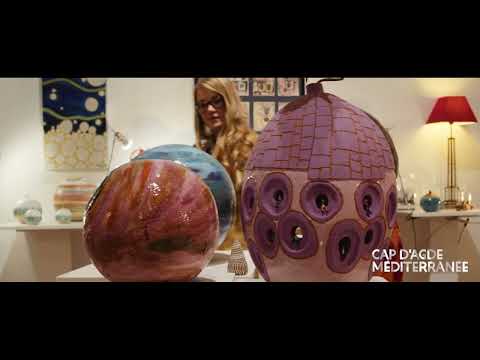
Le Cap d'Agde Méditerranée, France

Autumn and winter colours

Discover the destination with all the gorgeous colours of autumn, it is also a place worth discovering.
Read more
Pocono Mountains, Pennsylvania

Pocono Mountains, Pennsylvania

Fluffy white clouds roll across skies that always seem to gleam in a spectrum of blue in the Poconos. The majesty continues with a palette of rustic orange in the fall, the pristine white of snowfall in the winter, and the verdant emerald of forests and hillsides in the summer. Reigning for decades as a popular vacation area for citizens of New York and New Jersey, the Pocono Mountains must be seen in person to be believed. Lakes and rivers to explore, land to hunt, and various ski resorts provide an unforgettable outdoors experience.
Read more
Galapagos Islands

Galapagos Islands

In 1831, Charles Darwin sailed to South America aboard the H.M.S. Beagle. On the return voyage across the Pacific, the vessel stopped on a small group of islands far off the Ecuadorian coast, changing the course of human scientific endeavour and self-understanding forever. Fascinated by the unique wildlife on the islands, Darwin collected biological specimens and studied them over the next 30 years. His findings led to the formulation of the scientific theory of evolution by natural selection. This small group of islands and their one-of-a-kind wildlife are to thank for one of humanity's most remarkable discoveries. And today, almost 200 years later, they remain a source of endless fascination and a favourite travel destination for scientists, nature and wildlife enthusiasts, scuba divers, and anyone interested in the wonders of the natural world.
Read more
Five Days in Dubai
Dubai, United Arab Emirates

Five Days in Dubai

The sun always shines in Dubai, ensuring endless fun on every holiday. Spend your days lounging at the beach, dining at celebrated restaurants, shopping at al fresco districts and immersing yourself in the city’s cultural best. Our itinerary presents thrills for all ages and settings that inspire.
Read more
Three Days in Dubai
Dubai, United Arab Emirates

Three Days in Dubai

Whether you’re new to Dubai or a seasoned expert, our city always has surprises in store. Explore sky-high landmarks, charming waterside spots and cultural gems aplenty. Or go off the beaten track to hike in Hatta’s mountains, camp under the stars and create memories to last a lifetime.
Read more
Christmas Island National Park
Christmas Island, Australia

Christmas Island National Park

For nature lovers, Christmas Island National Park provides fantastic opportunities to observe unique plants and animals in their natural habitats. The park covers about two thirds of the island. As an isolated oceanic island, distant from other land masses, Christmas Island is home to a high proportion of endemic species. Several are endangered. The park protects significant ecosystems including much of the island's uniquely structured rainforests and two wetlands of international importance, the Dales and Hosnie's Springs. In and around the national park you will find a host of native sea and forest birds, unique marine life and land crabs — including tens of millions of red crabs, famous throughout the world for their spectacular annual breeding migration.
Read more
Red Crab Migration
Christmas Island, Australia

Red Crab Migration

Tens of millions of red land crabs live on Christmas Island. They are the Island's keystone species, because they play a vital role recycling nutrients and shaping and maintaining the structure of the rainforest. At the beginning of the wet season (usually in October/November), most adult Red Crabs suddenly begin their spectacular migration from the forest to the coast, to breed and release eggs into the sea. Breeding is usually synchronised island wide. The rains provide moist overcast conditions for crabs to make their long and difficult journey to the sea. The timing of the migration breeding sequence is also linked to the phases of the moon, so that eggs may be released by the female Red Crabs into the sea precisely at the turn of the high tide during the last quarter of the moon. It is thought that this occurs at this time because there is the least difference between high and low tides. The sea level at the base of the cliffs and on the beaches, where the females release their eggs, at this time varies the least for a longer period, and it is therefore safer for the females approaching the water's edge to release their eggs. Sometimes there are earlier and later migrations of smaller numbers of crabs, but all migrations retain this same lunar rhythm. The main migration commences on the plateau and can last up to 18 days. Masses of crabs gather into broad "streams" as they move toward the coast, climbing down high inland cliff faces, and over or around all obstacles in their way, following routes used year after year for both downward and return migrations. Movement peaks in the early morning and late afternoons when it is cooler and there is more shade. If caught in open areas, in unshaded heat, the crabs soon lose vital body moisture and die. The crabs will migrate to the coast, where the males will dig mating burrows and they will mate. After mating, the males will commence their return migration. The females will brood their eggs for 12-13 days before emerging from the burrows to commence spawning. The females will commence their return migration immediately after spawning. The eggs hatch into free swimming larvae immediately after they are dropped into the sea. The larvae grow through several stages in the ocean for over four weeks before emerging from the sea to become tiny crabs.
Read more