Explore a world of possibilities.

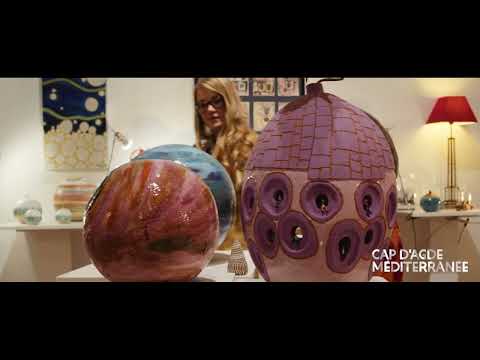
Autumn and winter colours
Le Cap d'Agde Méditerranée, France

Autumn and winter colours

Discover the destination with all the gorgeous colours of autumn, it is also a place worth discovering.
Read more
Corfu

Corfu

Nestled in the turquoise Ionian Sea, Corfu is considered by many to be the most beautiful of all the Greek islands. Wildflowers, cypress, and olive trees paint a beautiful landscape, complementing the stunning sandy beaches. The west coast delights with small coves embraced by cliffs and trees, while the north unveils a rocky coastline, crystal clear waters carving pebbled bays and coves. Immerse yourself in ancient ruins, savour delectable Greek cuisine, and revel in the splendour of this unforgettable island paradise.
Read more
Pau

Pau

Nestled in the corner of rural south-west France stands Pau, the capital of the Béarn province, a bastion of history and culture. The town occupies a unique geographical position in the foothills of the Pyrenées. With its awe-inspiring views of the mountain range, Pau is only a few hundred kilometres from the major towns of Bordeaux and Toulouse and even closer to Spain and the Atlantic Ocean. A springboard to sunny beaches or snow-capped mountains, Pau’s pretty streets, and excellent gastronomy are enough to ensure leaving will be difficult.
Read more
Five Days in Dubai
Dubai, United Arab Emirates

Five Days in Dubai

The sun always shines in Dubai, ensuring endless fun on every holiday. Spend your days lounging at the beach, dining at celebrated restaurants, shopping at al fresco districts and immersing yourself in the city’s cultural best. Our itinerary presents thrills for all ages and settings that inspire.
Read more
Three Days in Dubai
Dubai, United Arab Emirates

Three Days in Dubai

Whether you’re new to Dubai or a seasoned expert, our city always has surprises in store. Explore sky-high landmarks, charming waterside spots and cultural gems aplenty. Or go off the beaten track to hike in Hatta’s mountains, camp under the stars and create memories to last a lifetime.
Read more
Vrijthof
Maastricht, Netherlands

Vrijthof

You would almost miss them. Almost. Because as soon as you pass the entryway to the St. Servaas Basilica, you’ll figure out that it’s worth walking on. You’ll see for yourself that Maastricht doesn’t end at the Vrijthof. Sometimes you just have to take those few extra steps. That’s when Maastricht will surprise you with just how surprising the city centre really is. The Vrijthof has a number of little streets leading into it from all directions. They include Brusselsestraat, Grote Gracht, and De Kommel. Unlike the more idyllic boulevards in most of the rest of the city, these streets evoke a feeling of the urban, the artistic, the unknown. Here, students and locals come and go: artists, designers, professionals. It’s an area that’s moving fast: new shops, start-ups, young businesses, surprising concepts. Yet at the same time, it’s bursting with historic buildings, and is still very much a place where locals want to live. In truth, you can’t really describe the streets around the Vrijthof in a few words. It’s where local, university, business, authentic, forward-looking, and surprising Maastricht all come together.
Read more
Stokstraat Quarter
Maastricht, Netherlands

Stokstraat Quarter

The collection of streets between the city centre and the Jeker quarter is known as the Stokstraat quarter. It’s that historic corner of the city between two statues, ‘De Mestreechter Geis’ and ‘Slevrouwe’. All of these streets ultimately lead to the ever-charming, intimate and romantic Onze Lieve Vrouweplein. In this part of the city, you can find the warmth and charm of a classic Maastricht pub on virtually every corner. The quarter takes its name from what may be the city’s most famous (or infamous) street. Today, Stokstraat is known as the place for the most exclusive and luxury shops in the Netherlands, but it was not always so. If there’s any street that has seen its fortunes turn over the years, it’s this one. In the Middle Ages, its reputation was dubious thanks to its many bathhouse-brothels; later, the street enjoyed a renaissance with many reputable merchants established in it, until, as the Industrial Revolution took hold and the city centre became overpopulated with wave after wave of migrants from the countryside, the street became synonymous with grinding poverty. Living conditions here became so dire that there was even talk of demolishing the entire street. The Stokstraat quarter of today is the result of a dramatic redevelopment between 1950 and 1973, which succeeded in preserving its historic character but transforming it into a fashionable address for living, shopping, and dining.
Read more