Explore a world of possibilities.

Surabaya

Surabaya

Founded nearly eight centuries ago, Indonesia’s second-largest city has seen empires come and go. The founders of the Hindu Majapahit Empire arrived in the late 13th century and remained until the 17th, to be followed by Muslim rulers of Mataram, then the colonialists of the Dutch East India Company. In recent decades, Surabaya has grown into a cosmopolitan seaport and conurbation where 21st-century hotels, apartment towers, and shopping malls stand next to historic mosques and palaces.
Read more
Autumn and winter colours
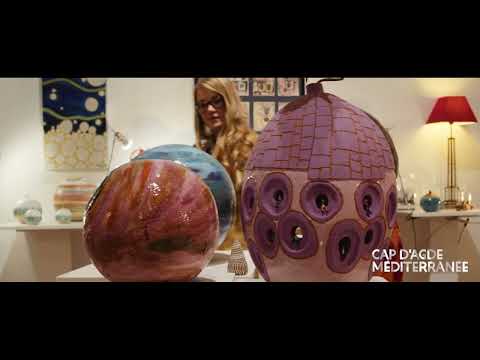
Le Cap d'Agde Méditerranée, France

Autumn and winter colours

Discover the destination with all the gorgeous colours of autumn, it is also a place worth discovering.
Read more
Lake Balaton

Lake Balaton

Hungary has no marine coastline, but it does have the largest freshwater body in Central Europe, Lake Balaton. The lake has been popular since the Magyar tribes first galloped into the Carpathian Basin in 896, and it shows no signs of losing its appeal. A collection of resort towns and an interesting bicycle route ring the 77 km long lake. Hévíz-Balaton Airport is 20 km from Keszthely at the southern end of the lake. From there, you can hire a car or take a bus and explore some of the resorts.
Read more
Five Days in Dubai
Dubai, United Arab Emirates

Five Days in Dubai

The sun always shines in Dubai, ensuring endless fun on every holiday. Spend your days lounging at the beach, dining at celebrated restaurants, shopping at al fresco districts and immersing yourself in the city’s cultural best. Our itinerary presents thrills for all ages and settings that inspire.
Read more
Three Days in Dubai
Dubai, United Arab Emirates

Three Days in Dubai

Whether you’re new to Dubai or a seasoned expert, our city always has surprises in store. Explore sky-high landmarks, charming waterside spots and cultural gems aplenty. Or go off the beaten track to hike in Hatta’s mountains, camp under the stars and create memories to last a lifetime.
Read more
Elaphite Islands
Dubrovnik, Croatia

Elaphite Islands

Near Dubrovnik there is the archipelago of thirteen larger and smaller islands and islets known under the common name of the Elafiti. Among them, the three inhabited islands are of particular interest. Starting from Dubrovnik westwards these are Kolocep or Kalamota, as it is called by the locals, Lopud and Sipan. These islands, being a nature park, give pleasure to the eyes and soul of every traveller seeking peace and relaxation. On these islands without traffic, surrounded by turquoise blue sea, you can enjoy a walk through the forest paths, rest on sandy and stone beaches, taste fresh seafood in restaurants and taverns.
Read more
Innsbruck

Innsbruck

A well preserved, colonnaded medieaval old town with its world renowned Golden Roof. Right next to this there's a brightly coloured, sparkling imperial palace, the Hofburg - baroque and monumental. A stone’s throw away is the Hofkirche, a court church containing larger-than-life bronze statues, the Schwarze Mander, standing guard around the (empty) tomb of Emperor Maximilian I., a truly breath-taking sight and unique in Europe. High above this superb architecture towers the Nordkette, a magnificent mountain range between 2300 and 2500 m.
Read more
Psyrri Neighbourhood
Athens, Greece

Psyrri Neighbourhood

Psyrri is a gentrified neighbourhood known for its bohemian cafe-bars, live music taverns, artisanal boutiques, exotic spice bazaars and small number of hotels. It's one of the oldest quarters of Athens and used to be regarded as a dodgy place until the early 90s. In the late 19th century, Psyrri used to be the ‘Bronx’ of Athens. ‘Koutsavakides’, ‘hobbler dudes’ in Greek, would walk the streets in their jackets worn on one sleeve and bully locals. You'll see this archetypical character show up in street art all over the neighbourhood.
Bookable
Read more
The Synagogue
Dubrovnik, Croatia

The Synagogue

A decree made by the government of the Dubrovnik Republic in 1546 allowed Jews to settle within the city ramparts. This officially marked the establishment of the Jewish Ghetto on the street called Žudioska. In 1652, one of the houses was turned into a Synagogue, whose interior is in the baroque style. It has been preserved to this day, with minor changes, and is one of the oldest synagogues in Europe. The first floor houses a museum with a number of religious artefacts and archives, Rococo, baroque and Louis XVI furniture and paintings by Italian masters.
Read more